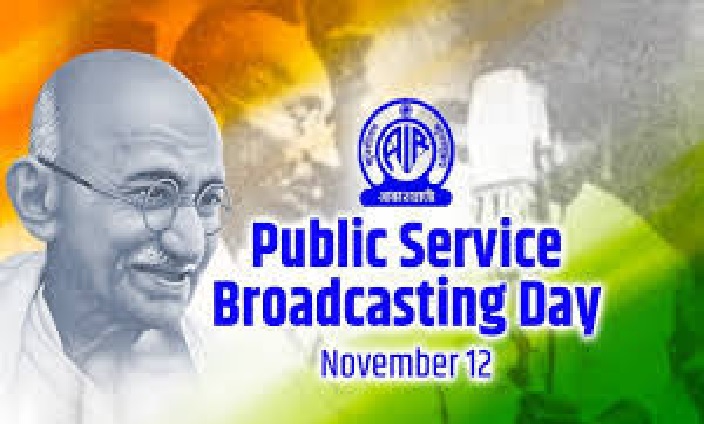
Public Service Broadcasting Day: History, Significance & Key Facts
Public Service Broadcasting Day is observed every year on November 12 in India. This day commemorates the historic radio broadcast delivered by Mahatma Gandhi in 1947, marking a significant moment in the evolution of public communication in independent India.
Historical Background
On November 12, 1947, shortly after India gained independence, Mahatma Gandhi visited the Broadcasting House in New Delhi for the first and only time. During this visit, he delivered a special radio address aimed at refugees staying in Kurukshetra on the occasion of Diwali.
Gandhi’s message focused on peace, communal harmony, and moral courage during a period of intense social and political turmoil following Partition.
He was accompanied by noted freedom fighter Rajkumari Amrit Kaur during this broadcast.
Interesting Facts About the Broadcast
- Initially, Gandhi was hesitant to use radio as a medium of communication.
- He eventually agreed after persuasion by industrialist Ghanshyam Das Birla.
- The radio studio was specially arranged to resemble Gandhi’s traditional prayer meeting environment.
- This remains Gandhi’s only radio broadcast, making it historically unique.
Declaration of Public Service Broadcasting Day
The importance of this event was formally recognized in 2000, when then Information and Broadcasting Minister Sushma Swaraj declared November 12 as Public Service Broadcasting Day. Since then, All India Radio (also known as Akashvani) has been commemorating this day every year through special programs and initiatives.
Recent Developments
In March 2023, during the 100th episode of Mann Ki Baat hosted by Narendra Modi, the studio was officially renamed “Bapu Studio” as a tribute to Gandhi’s legacy in public communication.
Significance of Public Service Broadcasting Day
This day highlights the critical role of public broadcasting in:
- Disseminating reliable and unbiased information
- Promoting national integration and unity
- Upholding democratic values
- Spreading the ideals of truth, non-violence, and social harmony as advocated by Mahatma Gandhi
- It also serves as a reminder for broadcasters to prioritize public interest over commercial gains.
Key Points for Competitive Exams
- Date: November 12
- First Broadcast: 1947 by Mahatma Gandhi
- Location: Broadcasting House, New Delhi
- Audience: Refugees in Kurukshetra
- Declared in: 2000
- Declared by: Sushma Swaraj
- Organized by: All India Radio (Akashvani)
- Recent Update: Studio renamed “Bapu Studio” in 2023
Conclusion: Public Service Broadcasting Day is not just a remembrance of a historic event but also a reaffirmation of the responsibility of media in shaping a well-informed and united society. It underscores the enduring relevance of Gandhian principles in modern communication systems.