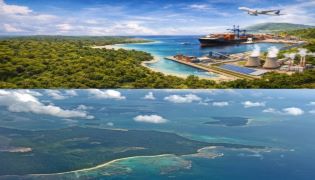
The National Green Tribunal (NGT) has upheld the Environmental Clearance (EC) granted to the ambitious Great Nicobar Mega Infrastructure Project, marking a major development in India’s environmental governance and strategic infrastructure planning. The tribunal observed that there was “no good ground to interfere” with the approval and highlighted the need to maintain a balance between ecological conservation and national development priorities.
This judgment is highly important for UPSC, State PCS, SSC, judiciary, and other competitive examination aspirants due to its relevance in environment, ecology, governance, infrastructure development, and international strategic affairs.
NGT Verdict: What Did the Tribunal Say?
A six-member special bench of the NGT reaffirmed the environmental clearance granted to the Great Nicobar Project and stressed that adequate environmental safeguards had been incorporated into the approval process.
Key Observations of the Tribunal
- The tribunal supported a balanced approach between environmental protection and strategic infrastructure development.
- It held that there was no conclusive violation of the Island Coastal Regulation Zone (ICRZ) Notification, 2019.
- The NGT relied on the recommendations and findings of a previously constituted High-Powered Committee (HPC).
- The tribunal directed authorities to: o Protect shorelines and coastal ecosystems o Conserve sandy nesting beaches o Undertake scientific coral reef regeneration
- Responsibility for ensuring compliance was assigned to the Union Environment Ministry.
The judgment reinforces the idea that developmental projects in ecologically sensitive regions can proceed if accompanied by strict environmental safeguards and regulatory oversight.
Background of the Litigation
The Environmental Clearance for the project was originally granted in November 2022 along with in-principle forest clearance. Following this, several petitions were filed challenging the project on multiple grounds.
Major Concerns Raised by Petitioners
- Alleged violations of coastal regulation norms
- Inadequate Environmental Impact Assessment (EIA) data
- Potential threats to biodiversity and coral ecosystems
- Concerns regarding indigenous tribal rights and forest diversion
In 2023, the NGT largely upheld the environmental clearance but formed a High-Powered Committee to examine issues relating to coral reefs and coastal regulation compliance. The HPC report was not made public because of strategic and national security considerations. The latest 2026 ruling represents the second round of litigation, once again validating the Environmental Clearance. However, matters relating to forest clearance are still pending before the Calcutta High Court.
Great Nicobar Mega Infrastructure Project: Overview
The Great Nicobar Project was launched in March 2021 under the “Holistic Development of Great Nicobar Island” initiative by NITI Aayog. The project aims to transform Great Nicobar Island into a major strategic, economic, and maritime hub in the Indo-Pacific region.
Implementing Agency
The project is being implemented by the Andaman and Nicobar Islands Integrated Development Corporation (ANIIDCO).
Estimated Cost
- Approximate project cost: ₹72,000 crore to ₹92,000 crore
- Planned in multiple phases Area Coverage
- Covers nearly 166 sq. km of land
- Includes around 130.75 sq. km of forest area
- Extends into parts of tribal reserve regions
Major Components of the Project
- International Container Transshipment Terminal: A major transshipment terminal is proposed at Galathea Bay to reduce India’s dependence on foreign ports such as Colombo and Singapore for cargo handling.
- Dual-Use International Airport: The project includes a greenfield airport designed for both civilian and military purposes, improving connectivity and strengthening strategic operations.
- Integrated Township: A large township is planned with projected population growth increasing from nearly 8,000 residents to over 3.5 lakh people in the coming decades.
- Power Infrastructure: The project also proposes a 450 MVA gas- and solar-based power plant to support industrial and urban infrastructure needs.
Strategic Importance of Great Nicobar Island
Location Advantage: Great Nicobar Island is located near the western entrance of the Strait of Malacca, one of the world’s busiest maritime trade routes. Nearly 40% of global trade passes through this region, making it strategically significant for maritime security and international commerce.
Indo-Pacific Strategy: The project strengthens India’s maritime presence in the Indian Ocean Region and supports India’s broader Indo-Pacific strategy amid increasing geopolitical competition. It is also aligned with:
- Maritime India Vision 2030
- Amrit Kaal Vision 2047
- India’s maritime security and blue economy objectives
Security Benefits
The island can serve as a forward operating base for surveillance and defence operations, enhancing India’s strategic capabilities in the Indo-Pacific region.
Economic Importance of the Project
India currently depends heavily on foreign ports for transshipment activities, with nearly 75% of Indian transshipment cargo being handled outside the country.
The Great Nicobar Project aims to:
- Reduce dependence on foreign maritime hubs
- Improve India’s trade competitiveness
- Generate long-term maritime revenue
- Develop world-class logistics infrastructure
The project is expected to significantly strengthen India’s shipping and logistics ecosystem.
Environmental and Legal Significance
The NGT’s decision is expected to become an important precedent in environmental jurisprudence and infrastructure governance.
Why Is the Judgment Important?
- It highlights judicial balancing between development and environmental conservation.
- It reinforces the role of environmental safeguards in mega projects.
- It demonstrates the importance of expert committee oversight in ecological disputes.
- It may influence future infrastructure clearances in ecologically sensitive areas.
The case also reflects the growing challenge of reconciling strategic national interests with biodiversity conservation and indigenous rights.
Key Takeaways for Competitive Exams
Important Facts to Remember
|
Topic |
Key Information |
|
Project Launch |
March 2021 |
|
Implementing
Agency |
ANIIDCO |
|
Clearance Upheld
By |
NGT |
|
Location |
Great Nicobar Island |
|
Key Feature |
Transshipment Terminal |
|
Strategic
Importance |
Near Strait of Malacca |
|
Estimated Cost |
₹72,000–₹92,000 crore |
|
Environmental
Concern |
Forest diversion, coral reefs,
tribal areas |
Conclusion
The NGT’s decision to uphold the Environmental Clearance for the Great Nicobar Mega Infrastructure Project represents a landmark moment in India’s environmental and strategic policy landscape. While the project promises major economic, maritime, and security benefits, it also raises critical concerns related to ecology, biodiversity, and tribal rights.
For competitive exam aspirants, this topic is extremely important from the perspectives of environment, governance, geography, international relations, and internal security. Understanding both the developmental advantages and environmental challenges associated with the project will help aspirants develop balanced analytical answers in mains examinations and interviews.