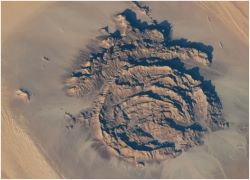
NASA scientists have identified a hidden
internal geological structure within it using satellite imaging and geophysics
mapping
¨
Great Dyke of Zimbabwe is
a 550-kilometre-long igneous formation that dates to about 2.5 billion years
ago.
¨
NASA scientists have
identified a hidden internal geological structure within it using satellite
imaging and geophysics mapping.
¨
The feature is not
visible on the surface and appears as a slight difference in the dyke’s inner
composition.
Great Dyke of Zimbabwe
¨
The Great Dyke extends
from north-east to south-west across central Zimbabwe. Its width ranges from 3
to 12 kilometres. Geologically, it is classified as a lopolith rather than a
traditional dike, and it has a flatter, saucer-like shape that lies parallel to
existing rock layers.
Internal Geological Structure
¨ The concealed structure is estimated to be 2.5 billion years old. Researchers working with NASA-funded data have linked it to an ancient magmatic pipe or a storage zone where magma cooled and chemically differentiated into mineral layers.
¨ Such structures are studied in relation to magma movement and mineral formation in the Archaean Eon.



, Jaipur, developed a low-cost sensor to detect minute amounts of toxic lead (Pb²⁺) ions in drinking water.jpg)