India has announced a phased expansion of
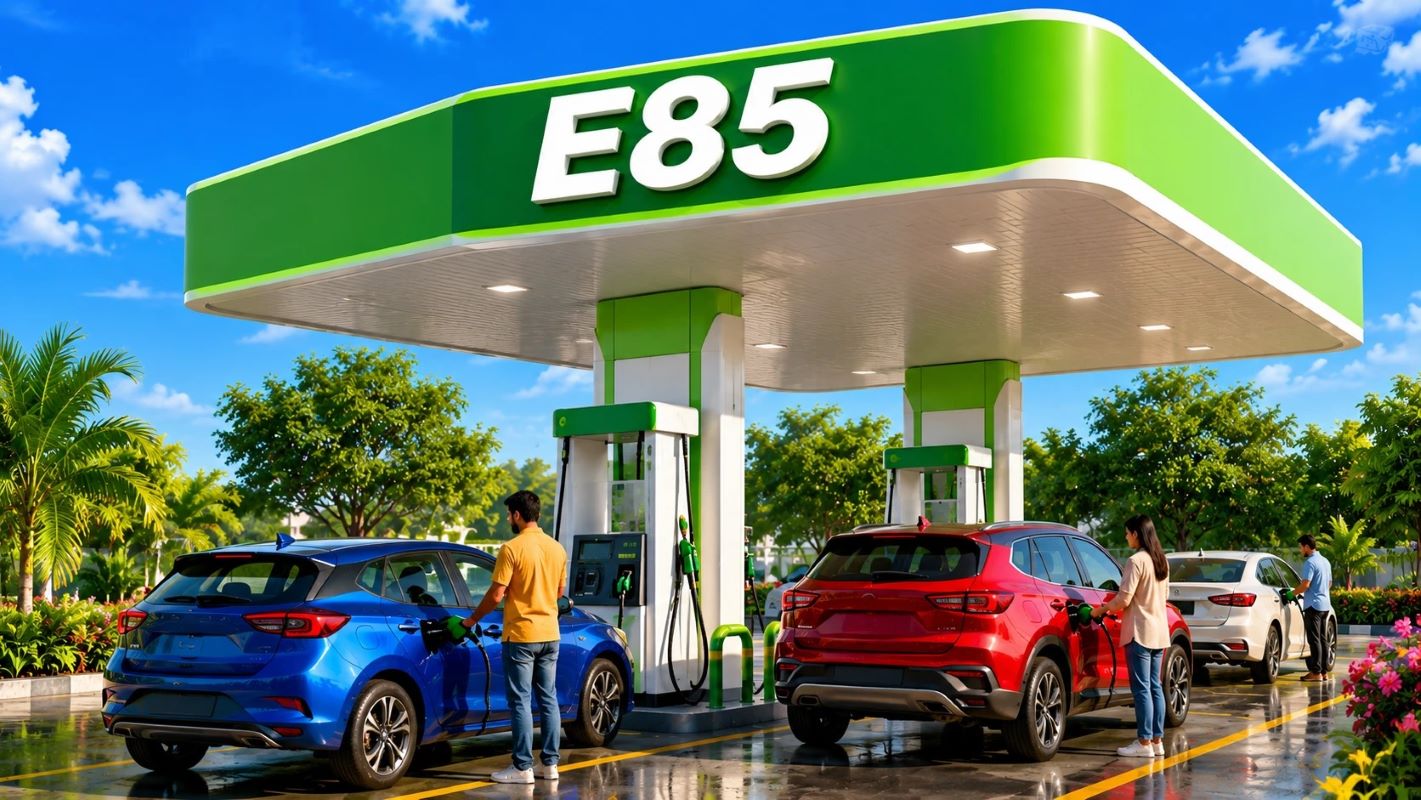
ethanol dispensing infrastructure, with 500 flex-fuel retail pumps planned by
the end of 2026 and about 5,000 outlets targeted by the end of 2027
¨
India has announced a
phased expansion of ethanol dispensing infrastructure, with 500 flex-fuel
retail pumps planned by the end of 2026 and about 5,000 outlets targeted by the
end of 2027.
¨
The initiative is linked
to the promotion of flex-fuel vehicles and higher ethanol blends in petrol
under India’s biofuel strategy.
¨
Ethanol blending refers
to mixing ethanol with petrol in fixed proportions.
¨
India achieved its 20%
ethanol blending (E20) target in petrol in 2025, ahead of the original 2030
deadline.
¨
E20 denotes petrol
containing 20% ethanol, while E85 contains 85% ethanol.
¨
Flex-fuel vehicles (FFVs)
are designed to operate on a wide range of petrol-ethanol blends.
¨
Recent flex-fuel models
in India include the Maruti Suzuki Wagon R Flex Fuel, Hero Splendor Plus Flex
Fuel, and Hero HF Deluxe Flex Fuel.
¨
These vehicles are
compatible with fuel blends ranging from E20 to E85.
¨
Ministry of Road
Transport and Highways proposed amendments to the Central Motor Vehicles Rules,
1989 on 27 April 2026.
¨
The proposed amendments
cover E85, E100 (100% ethanol), and B100 (100% biodiesel) fuel standards.
¨
The first phase of the
rollout is planned in Delhi-NCR, Mumbai, Pune, and Nagpur.
¨
The initiative aims to
strengthen clean mobility, reduce dependence on imported fossil fuels, and
support the growth of the biofuel economy.
 Scheme, Punjab 2026.jpg)