An international team of ichthyologists
from Europe, the United States, and India has discovered a new fish species,
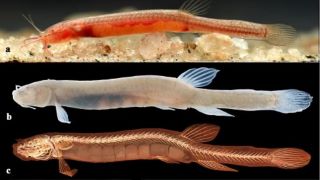
the Gitchak nakana, in Northeast India
¨ An international team of
ichthyologists from Europe, the United States, and India has discovered a new
fish species, the Gitchak nakana, in Northeast India.
¨
This species lives in
underground aquifers. It is the first phreatobitic fish reported from this
region of Asia.
¨
It is also the first
previously unknown underground creature identified in Northeast India.
¨
The discovery was
published in Scientific Reports on February 26.
¨
This species is unique.
The fish lacks a skull roof. Its brain is covered only by skin.
¨
Many underground species
are found in caves. Some species have adapted to other hidden habitats, such as
aquifers.
¨
Aquifers are underground
water systems. They host many invertebrates and some fish species.
¨
More than 300 underground
fish species are known worldwide.
¨
Less than 10 percent of
them are found in aquifers.
¨
The blind loach was
discovered in a dug well in Assam, India.
¨ It shows special
adaptations for underground life. These adaptations are known astroglomorphic
traits.
¨ The genus name comes from
the Garo word "gitchak," meaning red. This refers to the fish's
bright red color.
¨ The species name is derived from the Garo words "na tok," meaning fish, and "kana," meaning blind.
¨ The name refers to the species' lack of eyes.
, Kalpakkam, Tamil Nadu.jpg)